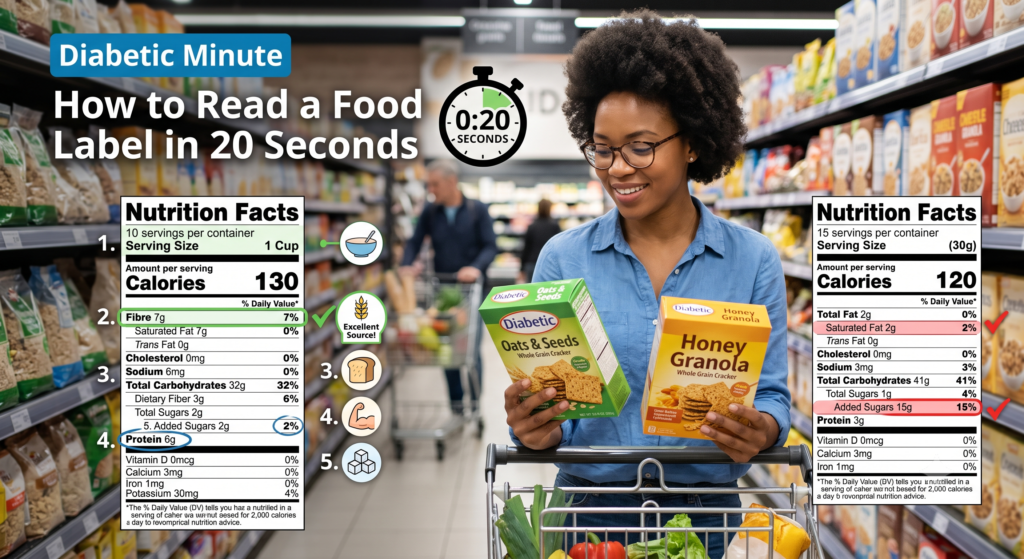
🍴 How to Read a Food Label in 20 Seconds
🛒 What It Is
Ever stand in the grocery store staring at two boxes of cereal, two loaves of bread, or two similar products and wonder which one is actually the better choice?
You’re not alone.
Food labels can feel overwhelming, with numbers, percentages, and ingredients competing for your attention. But the truth is, you don’t need to understand every single detail on the Nutrition Facts table.
In about 20 seconds, you can find the information that matters most.
👀 The 5 Things to Check
🥣 1. Start with the Serving Size
This is where everything begins.
All the numbers on the Nutrition Facts table are based on this amount.
If you eat more than the listed serving size, you’re also getting more of everything else—including carbohydrates, calories, sugar, and sodium.
Quick tip:
Ask yourself: “Is this the amount I would actually eat?”
🌾 2. Look at Fibre
Fibre is one of the nutrients many people don’t get enough of.
It helps slow digestion, can help you feel fuller longer, and may help reduce blood sugar spikes after eating.
A simple guide:
✅ 3 g or more per serving → Good source of fibre
🌟 5 g or more per serving → Excellent source of fibre
When comparing similar products, the one with more fibre often has an advantage.
🍞 3. Check Total Carbohydrates
Carbohydrates are an important part of understanding how a food may affect blood sugar.
But don’t make the mistake of looking at carbs alone.
Instead, look at the whole picture:
🍞 How many carbohydrates are there?
🌾 How much fibre does it contain?
💪 Does it include protein?
For example, one cereal may have slightly more carbohydrates but also more fibre and protein, making it a different choice than a lower-carb option with little nutritional value.
💪 4. Look for Protein
Protein can help you feel satisfied and may help slow digestion when paired with carbohydrates.
When comparing similar foods, a product with more protein may help keep you feeling fuller longer.
Think:
🥣 Yogurt with protein
🌾 Oatmeal paired with nuts or seeds
🍞 Whole grain toast paired with peanut butter
It’s not about adding protein to everything—it’s about creating balance.
🍬 5. Check Added Sugars
A little added sugar doesn’t automatically make a food “bad.”
But it is something worth noticing.
Look at:
- How much added sugar is listed?
- Is sugar near the beginning of the ingredient list?
- Does the product contain several forms of added sugar?
Remember: sugar can appear under many names, so the ingredient list can tell an important part of the story.
⚠️ The Catch
There is no single number that tells you whether a food is “good” or “bad.”
A food with more carbohydrates isn’t automatically a poor choice. A food with less sugar isn’t automatically the healthiest choice.
The goal isn’t perfection.
The goal is understanding what you’re choosing and how that food fits into your overall eating pattern.
✅ The Takeaway
The next time you’re grocery shopping, remember these five quick checks:
🥣 Serving Size
🌾 Fibre
🍞 Total Carbohydrates
💪 Protein
🍬 Added Sugars
That’s it.
Five things.
About 20 seconds.
You don’t need to become a nutrition expert to make informed choices. A little label knowledge can help you feel more confident the next time you’re filling your cart.
Because managing diabetes isn’t about making one perfect choice.
It’s about making small, measured choices—one bite at a time.
🍴 The Measured Fork Tip
Small, informed choices made consistently can have a bigger impact than chasing perfection.