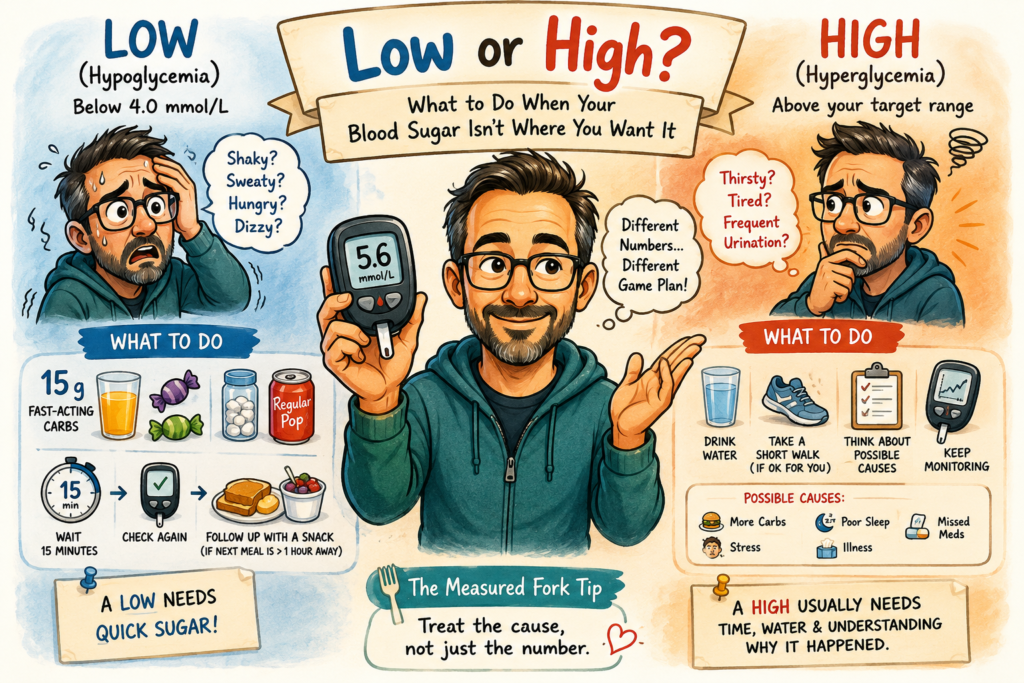
It Happens to All of Us – Hypoglycemia vs. Hyperglycemia: What to Eat and What to Do
You glance at your glucose reading and your stomach drops. Maybe it’s 3.8 mmol/L. Maybe it’s 13.9 mmol/L. Either way, the question is usually the same:
“Now what?”
The good news is that not every high or low blood sugar reading requires panic. Knowing how to respond can help you feel more confident and get your glucose back on track safely. Whether you’re newly diagnosed or have been living with diabetes for years, understanding the difference between hypoglycemia (low blood sugar) and hyperglycemia (high blood sugar) is one of the most important skills you can learn.
What Is Low Blood Sugar (Hypoglycemia)?
Hypoglycemia occurs when your blood glucose drops below 4.0 mmol/L.
It is more common in people who take insulin or medications that increase insulin production, such as sulfonylureas. If you’re managing Type 2 diabetes with lifestyle changes or medications like metformin alone, severe lows are much less common—but they can still happen.
Common Symptoms
- Shaking
- Sweating
- Sudden hunger
- Dizziness or lightheadedness
- Fast heartbeat
- Confusion or difficulty concentrating
- Blurred vision
- Feeling anxious or irritable
If left untreated, low blood sugar can become serious, so it’s important to act promptly.
What Should You Do?
If your blood sugar is below 4.0 mmol/L:
✅ Step 1: Stop what you’re doing.
Sit down if you feel dizzy or unsteady.
✅ Step 2: Have 15 grams of fast-acting carbohydrate.
Good choices include:
- ¾ cup (175 mL) fruit juice
- ¾ cup (175 mL) regular (not diet) pop
- 3–4 glucose tablets
- Glucose gel (follow package directions)
- Hard candies (check the label to ensure they provide about 15 grams of carbohydrate)
✅ Step 3: Wait 15 minutes.
If possible, check your glucose again.
If it is still below 4.0 mmol/L, repeat the treatment.
✅ Step 4: Follow up if needed.
If your next meal is more than an hour away, have a snack containing both carbohydrate and protein to help keep your blood sugar stable.
Examples include:
- Peanut butter on whole-grain toast
- Cheese and whole-grain crackers
- Greek yogurt with berries
- A small apple with a handful of nuts
What Is High Blood Sugar (Hyperglycemia)?
Hyperglycemia means your blood glucose is above your target range.
For many people with diabetes, consistently being above 10 mmol/L after meals or above 7 mmol/L before meals may be considered high, although everyone’s target range is different. Always follow the goals recommended by your healthcare team.
High blood sugar can happen for many reasons, including:
- Eating more carbohydrates than usual
- Stress or anxiety
- Illness or infection
- Poor sleep
- Missing medication
- Being less active than normal
- Hormonal changes
- Dehydration
Unlike a low blood sugar, a high reading often doesn’t require immediate treatment—but it does deserve your attention.
What Should You Do?
Instead of reaching for food, try the following:
✔ Drink water.
Staying hydrated helps your body function properly and can support your kidneys in removing excess glucose.
✔ Move—if it’s appropriate.
If you feel well and your healthcare provider has advised that exercise is safe for you, consider taking a light walk or doing another form of gentle activity.
✔ Take your medications as prescribed.
Never skip or double your medication unless instructed by your healthcare provider.
✔ Ask yourself a few questions.
- Did I eat more carbohydrates than usual?
- Am I feeling stressed?
- Did I sleep poorly?
- Am I getting sick?
- Have I been less active today?
Then continue monitoring your glucose.
One high reading is usually not an emergency.
It’s the overall pattern, not one isolated number, that matters most.
What Not to Do
If Your Blood Sugar Is Low
❌ Don’t ignore it.
❌ Don’t drive or operate machinery until your blood sugar has returned to a safe level.
❌ Don’t over-treat it by eating everything in sight. While it may be tempting, consuming too much sugar often leads to an unnecessary spike afterward.
If Your Blood Sugar Is High
❌ Don’t panic.
❌ Don’t skip meals.
❌ Don’t try to “starve” your blood sugar back down.
❌ Don’t assume you’ve failed. High readings happen to everyone.
❌ Don’t exercise if you’re feeling unwell, vomiting, or if your healthcare provider has advised against it.
Quick Comparison Guide
| Low Blood Sugar (Hypoglycemia) | High Blood Sugar (Hyperglycemia) |
|---|---|
| Below 4.0 mmol/L | Above your target range |
| Shaking, sweating, hunger, dizziness | Thirst, frequent urination, fatigue, blurred vision |
| Treat with 15 g fast-acting carbohydrate | Drink water and monitor |
| Recheck after 15 minutes | Think about possible causes |
| Follow with a balanced snack if needed | Resume healthy eating—don’t skip meals |
| Avoid exercise until the low is corrected | Light activity may help if appropriate |
🍴 The Measured Fork Tip
A low needs quick sugar.
A high usually needs time, water, and understanding why it happened.
Treat the cause, not just the number.
Final Thoughts
Every glucose reading tells a story, but no single number defines your health.
Some days your numbers will be right where you want them. Other days they’ll surprise you. That’s part of living with diabetes.
Learning how to recognize the difference between a low and a high blood sugar—and knowing how to respond calmly—can help you feel more confident and in control.
Remember, diabetes isn’t about being perfect. It’s about making informed choices, learning from your experiences, and moving forward one reading, one meal, and one day at a time.
Whether you’re treating a low with fast-acting carbohydrates or managing a high with hydration, movement, and patience, each decision is another step toward understanding your body a little better.
That’s what living well with diabetes is all about.
🍴 A Friendly Reminder from The Measured Fork
Every person’s diabetes journey is unique. The information in this article is meant to educate and support—not replace the personalized advice of your healthcare provider. Your target blood sugar range, medications, and treatment plan may be different from someone else’s. When in doubt, always follow the guidance of your healthcare team.